Over the past decade, companies have moved ever larger parts of their digital foundation to global cloud platforms. This has delivered significant benefits in the form of faster development, flexibility, and access to advanced services. But as business-critical applications, data, and operations are outsourced, deep dependencies arise on individual vendors’ infrastructure, pricing models, and jurisdiction.
Digital sovereignty is about regaining visibility into and control over your company’s IT foundation. At Stratu, we help you achieve digital sovereignty without necessarily giving up the benefits of public cloud. Our services range from mapping risks and digital dependencies to advising on the EU Data Act and DORA, as well as designing hybrid cloud environments based on technologies including Nutanix. We also help you assess which data and workloads it makes sense to place in Denmark.
Gain full transparency into where your data is stored, who has operational access, and which systems are tied to proprietary technologies or foreign jurisdictions.
Benefit from global cloud platforms without becoming locked in. By building on open standards and portable architectures, you ensure that critical workloads can always be moved.
Always have a tested digital exit route ready. With hybrid cloud, independent backup and documented exit strategies, you safeguard operations if vendor terms, prices or regulations change.
Digital sovereignty is the strategic discipline that ensures your company retains full control over its own data, IT systems and business options. It is not about disconnecting from global technologies, but about understanding your dependencies and actively preventing the company from becoming locked in by vendor terms, unexpected price increases or external regulatory changes.
Full data sovereignty: Ensures that the company’s sensitive information and intellectual property always remain subject to applicable Danish and European law and protected against unauthorized access.
Operational sovereignty: Guarantees that the company’s critical core processes can remain operational even if an external cloud provider is affected by major system failures, sanctions or service disruptions.
Technological sovereignty: Prevents vendor lock-in through modular, software-defined architectures that make applications and data fully portable across platforms.
Regulatory compliance: Meets requirements under the EU Data Act, NIS2, GDPR and DORA for active management of ICT third-party risks and documented transition and exit strategies.









Many organizations have unknowingly built up a significant strategic vulnerability. When applications, identity management and databases are tightly integrated into a single vendor’s proprietary services, management’s freedom of action is drastically reduced. To assess the company’s true sovereignty, the CIO and executive management should be able to answer four fundamental questions:
Where is your most critical data actually located? Do you know the precise physical and legal location of your data, and are you protected against changes to international data-transfer agreements?
What would it cost to leave your cloud provider? Have you calculated the true costs of migration, application rewrites and any data extraction fees?
How quickly can you move operations if the terms change? Do you have a technical roadmap for restoring operations in a local data center or with an alternative provider within an acceptable timeframe?
Do you have independent control of your security and keys? Do you manage your own encryption keys and access rights, or are you dependent on the provider’s own administration tools?
The EU’s new Cloud Sovereignty Framework makes it possible to assess and compare cloud solutions using specific digital sovereignty criteria.
The framework considers strategic control, legislation and jurisdiction, data and AI, operations, supply chains, technology, and security, among other factors. The result can be expressed as an overall Sovereignty Score.
This is an important step forward. However, the score is not a definitive answer as to whether your company is digitally sovereign. It assesses the individual cloud solution and provider. Your actual freedom of action also depends on how the technology is implemented, how closely your systems are interconnected, and whether you can actually move data and operations if the need arises.
The Sovereignty Score should therefore be used as decision support alongside a concrete assessment of your own dependencies, exit options, and technical architecture.


Digital sovereignty cannot be secured through legal contracts alone; it requires a technical infrastructure designed for flexibility. By reducing unnecessary dependencies between applications and the underlying infrastructure, you can make more workloads easier to move and reduce the risk of technological lock-in.
Hyperconverged infrastructure (Nutanix): Creates a consistent, software-defined foundation, where virtual machines and applications can move freely between your own data center, a private cloud and public cloud without time-consuming recoding.
Modern container environments (Kubernetes): Ensures newly developed applications are based on open standards and can run across different cloud platforms without adaptations to proprietary APIs.
Physically and logically separated backup: Reduces dependency on the primary cloud platform and strengthens the ability to restore data and operations in the event of critical incidents. This also requires that restore procedures and contingency plans are tested regularly.
Think of it this way: Public cloud gives you an efficient engine for everyday innovation. A sovereign hybrid architecture ensures that you own the chassis and the steering. This means it is always you who decides where the vehicle should go.
As an independent IT and cloud partner, Stratu helps you navigate between public cloud, private cloud and hybrid infrastructure. We do not advise from the perspective of a single locked-in platform, but design the foundation that gives your company the optimal balance between scalability, security, regulatory compliance and commercial freedom of action. Our process ensures a secure and focused transition:
Dependency mapping: We analyse your current IT landscape, identify critical vendor dependencies, data flows and calculate the cost of a potential transition.
Hybrid architecture and Landing Zones: We establish a robust foundation in Microsoft Azure combined with Danish Cloud and Nutanix Cloud Platform, so your workloads can run where they deliver the greatest value.
Documented and tested exit readiness: We develop concrete transition plans and failover procedures, that meet regulatory requirements under NIS2 and DORA, and ensure that the exit route actually works.
24/7 Danish operations and support: Our specialists handle monitoring, administration and security updates with full transparency and direct access to your dedicated contacts.
Complete the form, and we will have a no-obligation, strategic discussion about your current IT architecture, your digital dependencies and the opportunities to build a flexible Plan B.


Data sovereignty concerns legal and physical control over your data, including where data is stored, who has access, and which national laws govern the data. Digital sovereignty is a broader strategic concept, that, in addition to data, covers operational independence (the ability to maintain operations during crises) and technological sovereignty (the ability to move systems and workloads without prohibitive costs or technological lock-in).
Yes. Digital sovereignty does not require that you reject global hyperscalers such as Microsoft. What matters is the underlying architecture: By managing your own encryption keys, using open standards, establishing independent backup outside the platform and ensuring that critical core applications can run in a hybrid setup, the company retains full strategic freedom of action.
The EU Data Act requires cloud and software providers by law to remove technical, contractual and financial barriers to switching providers. The law prohibits data extraction fees (egress fees) when switching providers from 2027 and requires providers to support open interfaces. This gives companies a strong legal basis for demanding greater transparency and flexibility in their IT contracts.
Nutanix Cloud Platform provides hyperconverged infrastructure, that acts as a neutral software layer above the hardware. This means that you can run the same virtual machines and applications in your own data center, in Stratu’s Danish Cloud or in public cloud without redesigning or recoding your systems. This minimises dependence on specific hypervisors and hardware vendors.
Under DORA (the Digital Operational Resilience Act), financial entities and their critical providers must actively monitor concentration risks associated with cloud services. The company must have a well-documented, operationally feasible and regularly tested exit strategy, that demonstrates that critical functions can be transferred to another platform without unacceptable downtime.
In a time of technological acceleration and geopolitical uncertainty, it is no longer enough to have a plan for what happens if a server fails. As CEO Jeppe Klestrup puts it in a column in ITWatch:
“You don’t need to jump off the train—but you do need to know where the emergency exit is.”
– Jeppe Klestrup, CEO, Stratu
The question is no longer whether the digital foundation can crack, but what you do when it happens. Dependence on a few large technology vendors or cloud providers represents a strategic risk. Having a Plan B is not panic—it is prudence and a sign of business maturity.
A true Business Continuity Plan is not just an IT exercise. It is your tested, documented answer to the question: “If we could no longer operate the way we do today—what would we do tomorrow?” If you do not have the answer, it is time to build it. Not as a panic response, but as your next strategic decision.

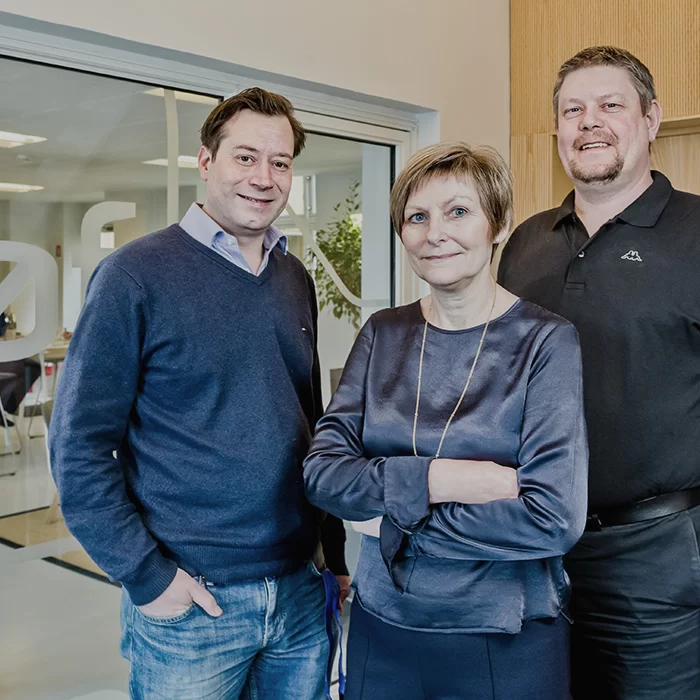
Få en uforpligtende snak om, hvordan I kan styrke kontrollen over data, infrastruktur og leverandørvalg. Lars hjælper med at afdække jeres afhængigheder og finde en løsning, der understøtter sikkerhed, compliance og større digital handlefrihed.